
How Early Investors Could Enjoy Potential Windfall Profits as the U.S. Nuclear Power Industry Comes Roaring Back
-
This revitalized industry desperately needs uranium, but supplies are falling short and prices are soaring.
-
And now, one under-the-radar U.S. company with two massive historical uranium deposits could become a key domestic supplier of the uranium the country needs.
-
Here are seven surprising reasons why investors who act now could see windfall profits
By Steve Cook, Senior Editor, The Investment Journal
Wednesday, October 22, 2025 9:00 A.M. CDT · 10 min read
The nuclear power renaissance has sent uranium mining stocks soaring over the past two years.
For example…
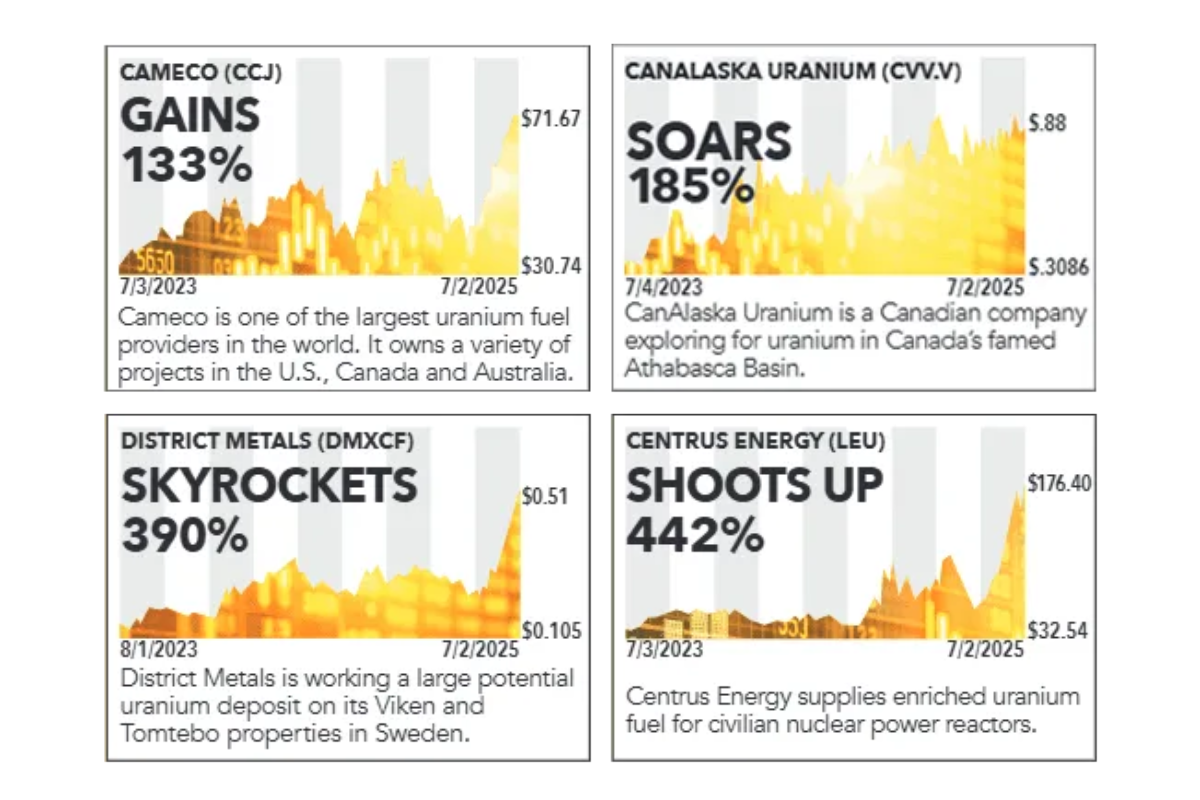
• Cameco (CCJ) has increased 133%…
• CanAlaska Uranium (CVV.V) has jumped 185%…
• District Metals (DMXCF) has shot up 390%…
• Centrus Energy (LEU) has soared 442%
These gains are no surprise when you consider that uranium prices have more than doubled over the last four years — rising 141% even though this megatrend is only just getting started.
This Megatrend is just Getting Started
Meanwhile, thanks to nuclear power’s surprising renaissance, the World Nuclear Association expects uranium demand to increase 28% by 2030. That seems likely to send prices even higher.
And that could be great news for uranium miners and the investors who buy them.
Get in now and you’ll have the chance to ride what could be one of the decade’s most powerful bull markets… one that could bring you windfall profits.
Better yet, that 28% forecast could be a conservative estimate. That’s because the power demands of the massive data centers needed to support artificial intelligence threaten to overwhelm the electric grid.
Why President Trump and Big Tech are Backing Nuclear Power’s Comeback
In fact, The North American Electric Reliability Corporation says that more than half of North America is already at risk of blackouts in the near future.
And like it or not, nuclear power could be our only way out.
Furthermore, as you’ll see in a moment, Big Tech is already moving towards making nuclear its go-to power source in the years ahead because it sees no other alternative.
On top of that, President Trump is all-in on the revival of nuclear power because he considers it critical to restoring U.S. energy independence.
The Next Big Mining Winner?
However, most importantly for you, my research has uncovered an under-the-radar uranium mining company that could be the sector’s next big winner because it’s sitting on two historical resources—35 million pounds in Colorado’s Coyote Basin and an additional 44.2 million pounds at its Cross Bones location.
The company is called Homeland Uranium (OTCQB: HLUCF; TSXV: HLU) and in a moment I’ll reveal seven reasons why it could be a big winner for your portfolio… and why I believe you should act before this renaissance really gets rolling and drives uranium demand even higher.
However, before I get into that, please allow me to introduce myself. My name is Steve Cook and I’m the editor of the FREE online newsletter, The Investment Journal.
For more than 30 years now I’ve been helping investors uncover and profit from special market opportunities on the verge of being discovered by large institutional investors.
I’ve long been a proponent of nuclear power — especially now, as breakthrough new technologies and designs have made it safer than ever.
As Elon Musk puts it, “Nuclear is very safe. If you look at the actual deaths from nuclear power, they’re minuscule compared to certainly any fossil fuel power generation.”
Furthermore, says Musk, “With the latest technologies, you can actually make a nuclear reactor where it is literally impossible to melt it down if you tried to melt it down.”
With that in mind, I’m as pleased as punch that it’s now making a comeback… and creating another potentially lucrative profit opportunity with Homeland Uranium (OTCQB: HLUCF; TSXV: HLU).
Saving the A.I. Revolution From Chinese Dominance
As you’ll see, the nuclear power renaissance is critical to securing America’s energy future. That’s because the data centers required to train AI and make it work have sent energy demand soaring.
These vast buildings — many of them 500,000 to a million square feet — are packed with power hungry computer servers that support the storage and computing needs of AI systems.
And we simply don’t have enough power to support them all.
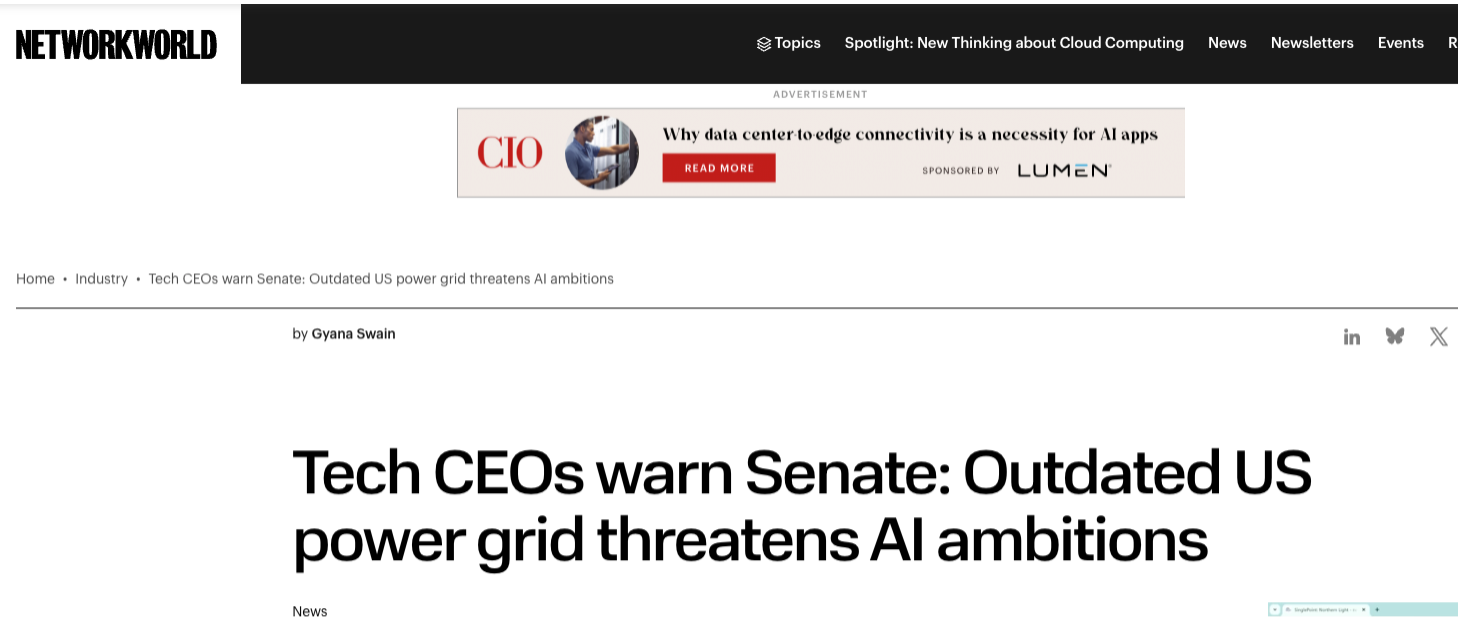
Executives from four leading tech companies warned a U.S. Senate panel that the U.S. will quickly fall behind China if something isn’t done to upgrade the electric grid.
In fact, executives from tech giants OpenAI, Microsoft, CoreWeave and AMD recently told a U.S. Senate hearing that the grid is incapable of handling AI’s soaring energy demands.
They further warned that weaknesses in the grid threaten to hobble innovation, especially in the AI race with China.
No wonder tech companies are beginning to panic about where they’re going to get the power they need to operate these data centers.
Caroline Golin, Google’s global head of energy market development, calls it “a very stark reality that we didn’t have enough capacity on the system to power our data centers in the short term and then potentially in the long term.”
Elon Musk echoes Golin’s warning, telling CNBC, “China power generation looks like a rocket going to orbit and U.S. power generation is flat.”
How You Can Profit From the AI Energy Crisis
All this, plus major Big Tech buy-in — more on that in a moment — has created the potentially lucrative profit opportunity I mentioned with Homeland Uranium (OTCQB: HLUCF; TSXV: HLU).
Thanks to two massive historical uranium deposits in Colorado, the company could soon become a domestic source of uranium, the fuel that makes the nuclear renaissance possible.
Based upon the information currently available to Homeland, it’s unable to categorize these resources to today’s standards or comment on the data verification processes used to calculate the current resources. Homeland intends to complete significant exploration work to determine the ultimate size of each resource in the next several months.
7 Reasons Why the Nuclear Power Megatrend Could Mean Windfall Profits
With that in mind, in the next few pages, I’ll reveal the seven reasons why I believe Homeland Uranium (OTCQB: HLUCF; TSXV: HLU) could be the next big winner in the uranium mining sector and why I’m now recommending that my subscribers begin their due diligence on the company.
Let’s get started with…
Reason #1: President Trump is Leading the Charge
As I mentioned, nuclear power plays a key role in President Trump’s plan to restore U.S. energy independence.
And he has repeatedly committed to expanding nuclear energy. As he put it on the campaign trail, “Starting on day one, I will approve new drilling, new pipelines, new refineries, new power plants, and new reactors.”
On top of that, even prior to President Trump taking office a variety of pro-nuclear policies were injected into the 2021 Infrastructure Investment and Jobs Act.
And President Biden was forced to accept them simply because despite spending hundreds of billions of dollars to force a transition to renewable energy, solar panels and windmills aren’t coming close to providing the energy the world needs. And it’s likely they never will.
Even the International Energy Agency — a long-time cheerleader for renewable energy — projects that by 2027, they’ll still only provide about 14% of the world’s electricity.
The fact is, it will be many decades — and perhaps never — before solar panels and windmills can even come close to providing the energy America needs to keep the lights on, the EVs charged and the data centers operating.
As a result, the Act spends $6 billion to prevent the premature closing of nuclear power plants… and another $2.5 billion to subsidize research into advanced nuclear power projects.
Furthermore, 2022’s Inflation Reduction Act includes tax incentives to stimulate the development of advanced nuclear reactors. And it spends $700 million to help develop a domestic supply chain for high-assay low-enriched uranium (HALEU), the fuel needed for the next generation of advanced nuclear reactors.
On top of that, in early 2024, Congress passed the Atomic Energy Advancement Act.
The bill directs the Nuclear Regulatory Commission (NRC) to streamline the approval of new reactor designs, reduces some licensing application fees and authorizes increased staffing at the NRC to speed up the process.
Naturally, the more nuclear power plants that come online, the higher the demand for uranium could be for years to come. And as prices soar, that could mean good times for uranium mining companies such as Homeland Uranium (OTCQB: HLUCF; TSXV: HLU).
Reason #2: Power Demand is Soaring Beyond What the Grid Can Support
Even as the Biden Administration took steps to “end fossil fuels,” as the former President put it, demand for electricity was soaring into the stratosphere.
This exploding demand is driven by the rising number of electric vehicles, the increased use of heat pumps and other electric appliances, cryptocurrency mining and, as I mentioned, the staggering power needs of the massive data centers powering the artificial intelligence revolution.
However, it’s those data centers that threaten to throw the grid over the edge. Training the vast number of AI models being developed all over the globe consumes vast amounts of power. As does answering the questions AI users ask.
On top of that, these centers have to run 24 hours a day, seven days a week. There’s no shutting down for the night.
Believe it or not, a single new data center can use as much electricity as hundreds of thousands of homes.
And that’s nothing compared to the power needs of the massive $500 billion Stargate AI center touted by President Trump. It’s estimated that the center will require a whopping 7.5 gigawatts of electricity, about what it takes to power 6.5 million homes.
That’s more homes than are in all of Los Angeles County — the most populous county in the United States.
And 335 data centers are now under construction in the United States. Many more are under construction overseas.
No wonder the International Energy Agency (IEA) is projecting that global electricity consumption from data centers in 2026 will be double that of 2022.
And by 2030, experts project that data centers will consume as much or more power than the current electricity consumption of both the UK and the Netherlands combined.
Forecast: Half of North America Will Suffer from Energy Shortfalls
As I mentioned earlier, The North American Electric Reliability Corporation (NERC) estimates that more than half the continent will experience serious energy shortfalls over the next five to 10 years due to data centers, electrification and the closing of power plants.
DigitalBridge, a company that invests in data centers, is even more pessimistic, forecasting that key markets will run short of the electricity they need to power data centers within just two to three years.
Or, as a Washington Post headline put it in March 2024, “Amid explosive demand, America is running out of power.”
The Post went on to say, “Vast swaths of the United States are at risk of running short of power as electricity-hungry data centers and clean-technology factories proliferate around the country, leaving utilities and regulators grasping for credible plans to expand and modernize the nation’s ancient power grid.”
Renewable Energy Can’t Do the Job
Worse yet, all this demand is sending electricity prices up, up and away. Believe it or not, in California, which is leading the charge toward electrification, electric bills have risen 35% to 45% since 2020.
While President Trump’s “drill, baby, drill” philosophy could alleviate some of these problems, the big tech companies are resisting the siren song of fossil fuels because they’ve made foolish commitments to achieving net zero emissions and have been virtue signaling about it for years.
Furthermore, they know better than anyone that solar and wind power can’t come close to providing the consistent, reliable and affordable power the grid needs.
Even the Washington Post, a reliable cheerleader for renewable energy over the years, headlined a recent article: “Renewables were supposed to take over the grid. Instead, they’re falling short.”
And that means one of the only ways Big Tech can keep its multi-million dollar data centers from turning into dark and dusty ghost towns is to embrace nuclear power.
Reason #3: Nuclear Energy is Back in Vogue as Tech Giants Scramble to Get the Power They Need
Tech giants are already scrambling to ensure they can get the power they need to fuel their data centers. For example, Microsoft recently made a deal with Constellation Energy to buy energy to power its data centers.
And believe it or not, that power will come from the re-opened Unit 1 nuclear reactor at the infamous Three Mile Island.
Microsoft tying its image to Three Mile Island is a sign of just how serious these companies have become.
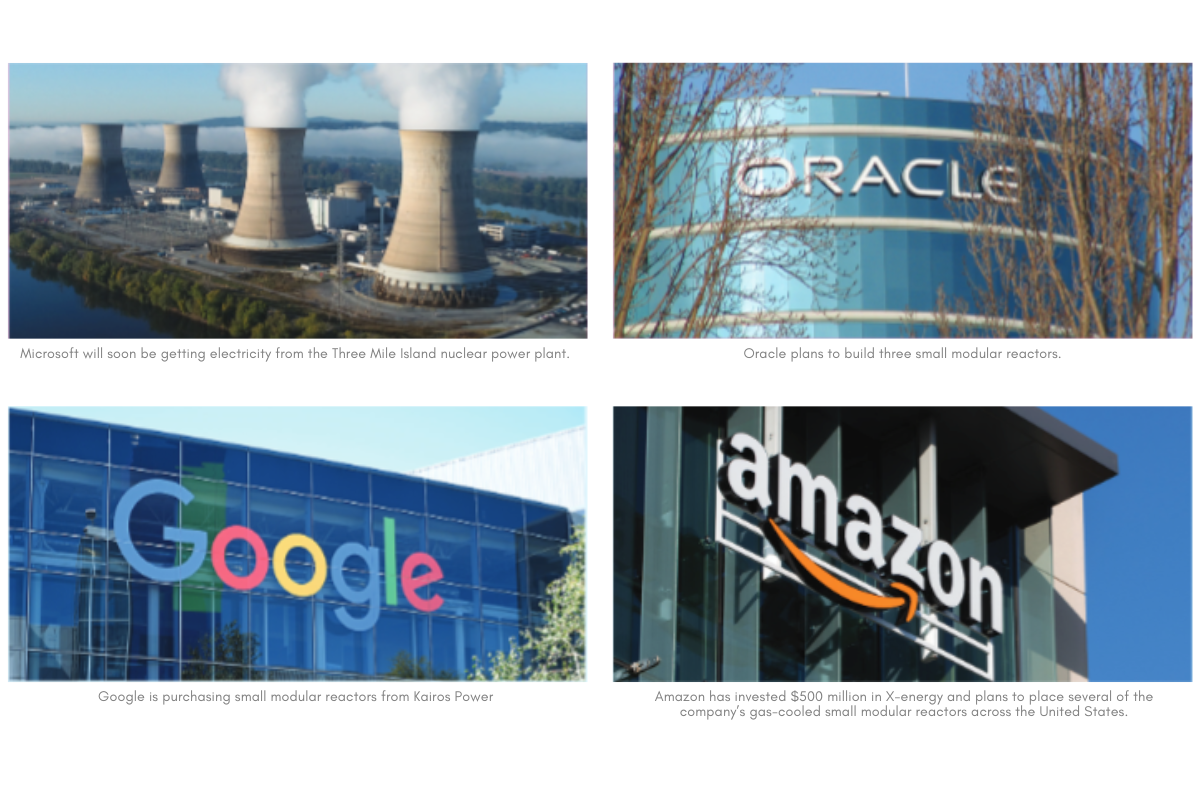 And Microsoft is far from alone …
• Oracle has secured permits for three small modular reactors to fuel a planned AI data center.
• Google cut a deal to purchase small modular reactors from Kairos Power.
• Meta is actively searching for nuclear energy developers to meet its “AI innovation and sustainability objectives.”
• Amazon just dropped $500 million to invest in X-energy, planning to deploy four of the company’s gas-cooled reactors by the early 2030s.
The result: These companies can seek to secure reliable power without breaking their precious net-zero promises.
Governments Vow to Triple Nuclear Power
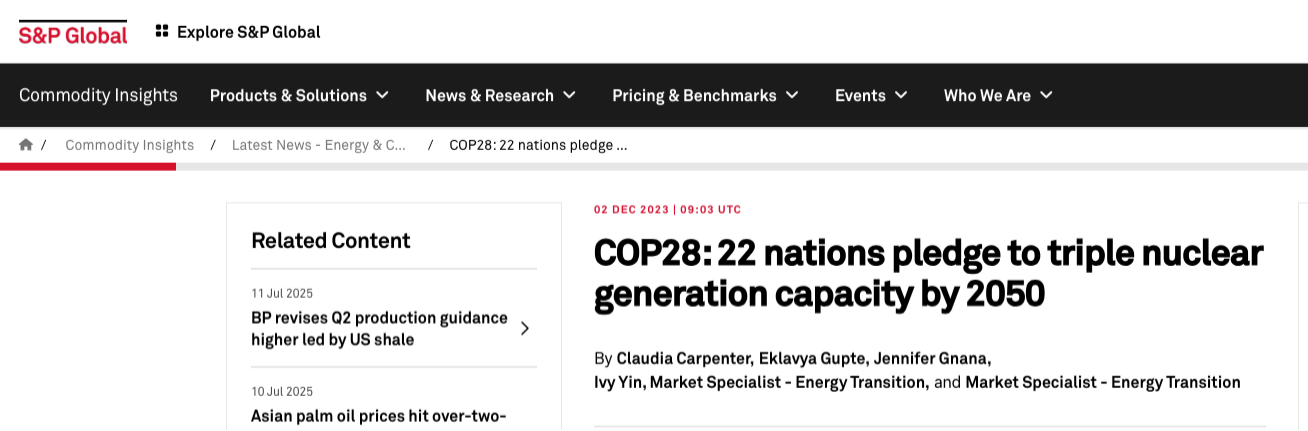
Furthermore, world leaders are jumping on the bandwagon as well. At the 2023 UN Climate Conference, 22 nations — including the U.S. — pledged to triple nuclear capacity by 2050.
And it’s not just a lot of talk:
• Globally, 66 nuclear reactors are already under construction
• 101 more are in the permitting pipeline
• 314 more have been proposed.
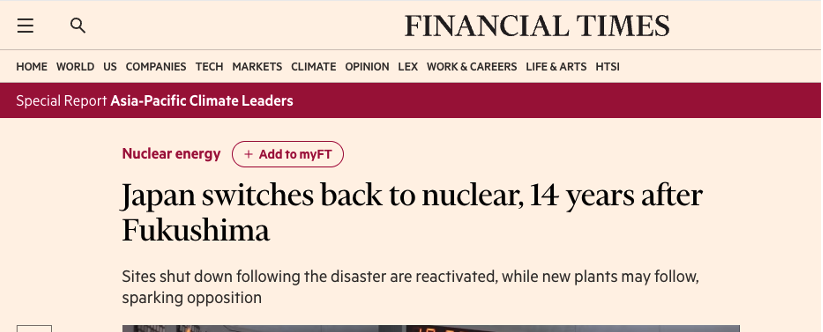
Japan is bringing its nuclear reactors back online and even plans to build new ones.
And even Japan is getting back into the nuclear game. 14 years after the country completely shut down its nuclear industry in the wake of the disaster at its Fukushima nuclear power plant, it has announced that it will reactivate existing plants and plans to build new ones.
The math is simple: More reactors equal massive uranium demand. And that could be great news for Homeland Uranium (OTCQB: HLUCF; TSXV: HLU). Which brings me to …
Reason #4: Uranium Prices are Exploding — and This Could be Just the Beginning
As I mentioned earlier, nuclear power’s remarkable comeback has sent demand for uranium soaring and prices have more than doubled over the last four years, rising 141%.
But here’s the kicker: this massive run-up might be nothing compared to what’s coming.
According to the World Nuclear Association, uranium demand will surge another 28% by 2030.
Meanwhile, global uranium production is barely keeping up with current demand, hitting 68,038 metric tons in 2023.
As a result, research consultancy, Thunder Said Energy issued a stark warning: “As things stand there will not be enough uranium mined and upgraded to ramp nuclear generation.”
Translation: We’re heading straight into a supply crisis.
No wonder Kazatomprom — the world’s largest producer of natural uranium — predicts a global shortfall of 21 million pounds by 2030 that will rise to 147 million pounds by 2040.
U.S. Supply is Critically Low
But here’s where it gets really interesting for American investors:
Despite being the world’s largest uranium consumer, U.S. production has virtually vanished — collapsing by a staggering 98% since 2000.
And while we currently make up the difference with imports, we’re overly dependent on supplies from countries that are hostile, unreliable or both.
On top of that, the Department of Energy has established a strategic uranium reserve and plans to purchase up to a million pounds of domestically produced uranium.
The setup is perfect: Exploding demand, crippled supply and a national security crisis that’s about to force America’s hand.
It’s just one more reason why I recommend you consider positioning yourself for potential profits, before that happens. Homeland Uranium (OTCQB: HLUCF; TSXV: HLU) could be a great way to do that, as rising prices potentially increase the value of every pound of uranium it can bring out of the ground.
While that could be great for Homeland, an even bigger factor working in its favor could be…
Reason #5: Unreliable Foreign Sources Mean the United States Must Develop a Domestic Supply of Uranium
America depends on uranium imports from some of the world’s most dangerous enemies and unstable regimes. It’s a national security nightmare that makes it essential for the U.S. to develop domestic uranium supplies.
This rogues’ gallery of unreliable, unfriendly and/or unstable uranium suppliers includes…
• Russia — which has already banned exports to the U.S.
• Kazakhstan and Uzbekistan — former Soviet satellite countries that China is moving in on fast. Beijing wants to lock in uranium supplies from these countries that provide 36% of our uranium supply
• Niger — where a military coup has killed all uranium exports
• China — which is stockpiling a massive 454,000 metric tons over 15 years . That’s half of all global production at current levels.
No wonder China recently built an enormous uranium warehouse near its border with Kazakhstan.
And trainloads of uranium arrive regularly.
And to add insult to injury, China is in talks with Uzbekistan’s government about developing two black shale uranium deposits in the country.
Supply Issues Will Only Get Worse
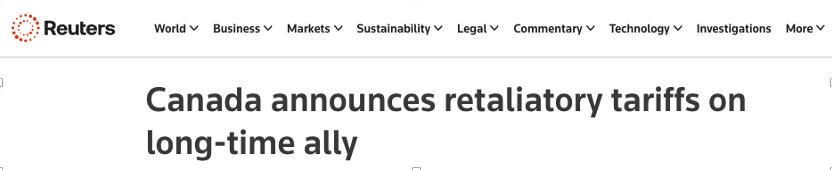
Worse yet, even our “allies” are turning against us. Trump’s Liberation Day tariffs have put our relationships with Australia and Canada in jeopardy. What happens when they retaliate by cutting uranium exports or jacking up prices?
The writing is on the wall: Foreign suppliers will tighten their grip as relations deteriorate.In other words, America could soon see itself squeezed out of the global uranium market.
But here’s where smart investors see opportunity:
President Trump knows we’re vulnerable. In March, he invoked the Defense Production Act to spur domestic uranium production, providing financing for new projects and fast-tracking permits.
Combined with his executive orders fast-tracking the construction of new nuclear power plants, we’re witnessing the re-birth of America’s domestic uranium mining industry.
All this could be good news for Homeland Uranium (OTCQB: HLUCF; TSXV: HLU), which is on its way to becoming a domestic supplier.
Reason #6: Homeland Uranium Owns Two Massive Historical Uranium Deposits, Making It a Potentially Critical Domestic Source
Back in 1979 a company called Western Mining discovered a potential 35-million-pound uranium resource in northwestern Colorado’s Coyote Basin.
It was a big, exciting discovery — one of the largest ever in the United States as a single deposit.
Then Three Mile Island happened. Nuclear power died overnight. The uranium market collapsed. And Western Mining walked away and allowed the claims to expire.
How Three Mile Island and Fukushima Created an Opportunity for Homeland Uranium
Fast forward to 2011: An Australian company called Energy Ventures picks up the claims, ready to cash in on the uranium boom. Then Japan’s Fukushima nuclear disaster hits.
History repeats itself. The claims expire again.
And then, for over a decade, this potential 35 million pound treasure sat forgotten.
But then, in 2024, Shift Rare Metals began pouring over old filings from the SEC.
And the company’s team came across the 2006 SEC filing that listed Western Mining’s 35-million-pound historical discovery… a discovery that was just sitting there, unclaimed.**
Shift staked a claim and was soon introduced to Roger Lemaitre, a uranium industry veteran and today the President & CEO of Homeland Uranium (OTCQB: HLUCF; TSXV: HLU).
Roger — who I’ve gotten to know a lot about since I began researching the company — tells me he was, to put it mildly, highly skeptical.
As far as he was concerned it wasn’t possible for him to have never heard of an untapped discovery of this magnitude located in the United States.
And frankly, at first glance, I thought the story stretched credulity as well.
But Roger began looking into it … and discovered that the situation was precisely as described … and he had a rare opportunity to pick up the claims for the bargain basement price of around 15 cents a pound.
And that purchase could be about to pay off big time for the company.
For starters, Western Mining’s original 35 million pound historical resource** — which is based on 24 drill holes — is a great cornerstone asset upon which to build a viable company.
At today’s (Sept. 17, 2025) price of $76, that uranium resource if converted to today’s resource standards could become one of the most compelling uranium projects in the U.S.
And to have that much uranium in a single deposit is truly unique. Most companies have to cobble together four or five or six different deposits crossing multiple jurisdictions to even come close to 35 million pounds of historical resources.
Better yet, the 1970’s exploration of Coyote Basin covered only a fraction of the site’s 14,213 acres and only defined the historical resource down to about 250 feet, extremely shallow by today’s standards.
In fact, the company is preparing to expand exploration activities at the site. And that’s a task made much easier by the fact that Homeland was able to get its hands on the property’s historical uranium exploration dataset.
The dataset — which is worth several million dollars — includes exploration reports, surface sampling, geological mapping, geophysical surveys, and drill hole information and more …
This data is expected to make it easier and faster for Homeland Uranium (OTCQB: HLUCF; TSXV: HLU) to do the exploration necessary to upgrade its resource estimates to current NI 43-101 standards.
Another great thing about the Coyote Basin Property is that it’s centrally located to three licensed uranium mills that can process the ore.
All three are within 300 miles of the property, which greatly reduces the cost of transport and speeds up the process.
A Second Property with a Potential 44 Million Pounds of Uranium
On top of all that, Homeland just announced that is has acquired the Skull Creek Uranium Project, a 1,489 acre property located about 20 miles from Coyote Basin.
The property — which the company is renaming the Cross Bones Project — hosts a historical resource of 44.2 million pounds of uranium.**
The company is already working to confirm the size of the resource and to potentially expand it via exploration.
Reason #7: A Surprisingly Strong Management Team with Decades of Experience
One of the most important elements for success with any company is the quality of its management team. It’s so important, it’s one of the first things we evaluate when we’re looking at a company.
More than once, I’ve seen a company with excellent potential flounder or fail because it didn’t have competent leadership.
That’s why I make sure a company has a quality team in place before I recommend investors even consider adding it to their portfolios.
Fortunately, after taking a close look at the team running Homeland Uranium (OTCQB: HLUCF; TSXV: HLU) I’m happy to say they clearly have the skills and the experience to potentially make this company a success.
In fact, they’re actually the caliber of experienced industry veterans I’d expect to find at much bigger mining companies. But clearly, they believe Homeland Uranium is a unique and exciting opportunity with greater potential than they’d find at a large cap company.
And the quality of this team is just one more reason to consider adding Homeland Uranium (OTCQB: HLUCF; TSXV: HLU) to your portfolio.
The team is led by…

Roger Lemaitre, President & CEO: Roger is a professional engineer and geologist with 30+ years’ experience in the mining business.
For the last 24 years, he’s worked in the uranium sector in countries all over the world, including Canada, Mongolia, Sweden, Finland, South Africa and Australia.
His track record speaks for itself: While Roger was CEO of UEX Corporation, it doubled its uranium resource from 75 million to 150 million pounds over nine years.
The result? UEX’s market cap exploded from $75 million to $310 million — more than quadrupling before selling to Uranium Energy Corporation.
Bottom line: Roger knows exactly how to turn uranium in the ground into massive shareholder profits.
Roger also spent 11 years at Cameco as a field geologist and Saskatchewan Exploration Manager, running the company’s global exploration portfolio and making two significant discoveries along the way.
Consider Starting Your Due Diligence on Homeland Uranium Today
As you can see, Homeland Uranium (OTCQB: HLUCF; TSXV: HLU) could be well positioned to ride nuclear power’s revival and the uranium boom for some nice profits and a potentially higher stock price.
After all, nuclear power is making a surprising comeback all over the world, sending uranium demand off the charts …
Meanwhile, supplies are coming up short … and most of the world’s suppliers are unreliable, hostile or both …
… creating a supply-demand imbalance that could lead to much higher prices …
… all of which could be good news for companies — especially U.S. based-companies — that can supply uranium that the United States and the world needs.
Companies such as Homeland Uranium (OTCQB: HLUCF; TSXV: HLU).
It has two massive historical uranium deposits right here on U.S. soil … it has a proven team in place with the experience to bring the uranium out of the ground… and a vast array of potential customers.
Bottom line: I recommend speaking with your financial advisor about Homeland Uranium (OTCQB: HLUCF; TSXV: HLU) due to its growth potential.
FREE Special Report Reveals Why Homeland Uranium Could Bring You Windfall Profits in 2025 and Beyond
Still, there’s more I can tell you about why I find Homeland Uranium to be such a compelling investment opportunity.
Because of that, I recently put the finishing touches on a comprehensive Special Report with even more details about Homeland Uranium and why it could be a big winner for investors.
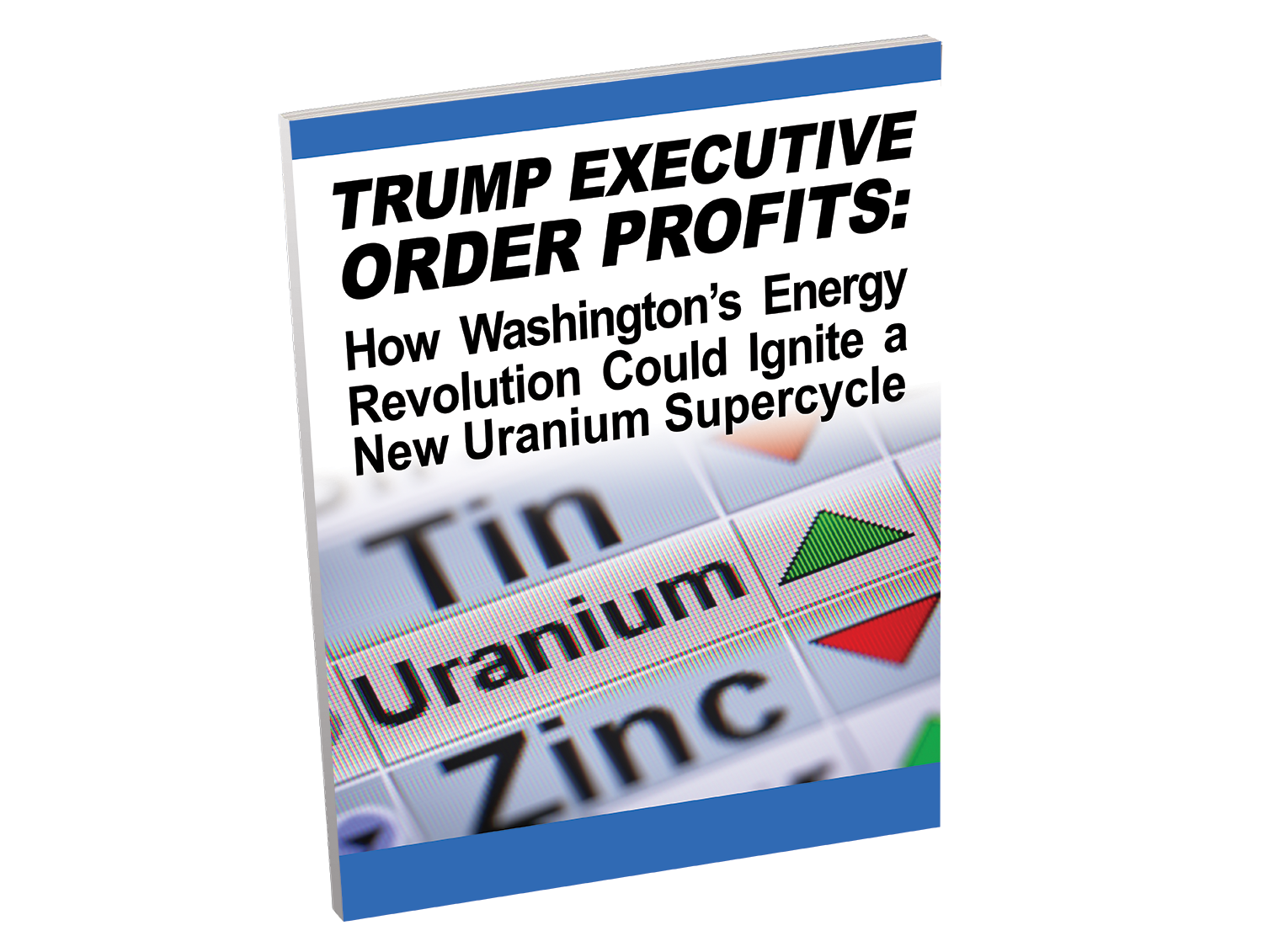
It’s called Trump Executive Order Profits: How Washington’s Energy Revolution Could Ignite a New Uranium Supercycle… and you can download a FREE copy immediately when you accept a FREE, no-obligation subscription to The Investment Journal.
Every day The Investment Journal brings you …
• Crucial forecasts on what’s coming in the economy and markets, so you can be prepared for what’s coming …
• Actionable advice so you can build a diversified and potentially more profitable portfolio, all based on my three decades of experience in the financial markets …
• Critical updates on stocks, bonds, precious metals and more, so you can become a better, more informed investor
Your Subscription is 100% FREE, with No Obligation
Right now, your subscription to The Investment Journal online newsletter is absolutely FREE. And there is no obligation to buy anything… ever.
Plus, when you subscribe today, you’ll receive my FREE Special Report, Trump Executive Order Profits: How Washington’s Energy Revolution Could Ignite a New Uranium Supercycle.
In this Special Report, you’ll discover everything you need to know about Homeland Uranium (OTCQB: HLUCF; TSXV: HLU) — and all the reasons why it could be a winner for early investors.
Start Your Risk-Free Subscription Today
Click the button below to get started with The Investment Journal newsletter today..
However, whether you decide to subscribe or not, be sure to speak with your financial advisor about investing in Homeland Uranium Corp. (OTCQB: HLUCF; TSXV: HLU).
Sincerely,
Steve Cook, Senior Editor
The Investment Journal
**It’s important to caution you that the Coyote Basin and Cross Bones/Skull Creek resources are historical in nature. This is why I suggest you don’t rely upon the estimates as proven facts. As is typical of mining companies, Homeland makes this point a little less succinctly, saying, “Homeland and a Qualified Person is unable to comment on the quality of the resources or compare them to Canadian Institute of Mining and Metallurgical standards or Canadian National Instrument 43-101 requirements. Neither Homeland or a Qualified Person is able to judge the adequacy of the sampling protocols or data verification procedures used to calculate both historical resource estimates. Substantial mapping, prospecting and a multi-phase confirmation drilling program will be required at both Coyote Basin and Skull Creek to determine the size and quality of any resources on those projects.”
IMPORTANT NOTICE AND DISCLAIMER: All investments are subject to risk, which must be considered on an individual basis before making any investment decision. This paid advertisement includes a stock profile of Homeland Uranium Corp. (OTCQB: HLUCF). Personal Finance is an investment newsletter being advertised herein. This paid advertisement is intended solely for information and educational purposes and is not to be construed under any circumstances as an offer to sell or a solicitation of an offer to purchase any securities. In an effort to enhance public awareness, Homeland Uranium Corp. (OTCQB: HLUCF) is the sole source of funds for a budget of approximately $1,965,312 provided to the advertising agency to cover the costs associated with creating, printing and distribution of this advertisement. Personal Finance may receive subscription revenue in the future from new subscribers as a result of this advertisement for its newsletter. The advertising agency will retain any excess sums after all expenses are paid. While this advertisement is being disseminated and for a period of not less than 90 days thereafter, Personal Finance, the advertising agency, and their respective officers, principals, or affiliates will not sell securities of Homeland Uranium Corp. (OTCQB: HLUCF). If successful, this advertisement will increase investor and market awareness of Homeland Uranium Corp. (OTCQB: HLUCF) and its securities, which may result in an increased number of shareholders owning and trading the securities, increased trading volume, and possibly an increase in share price, which may be temporary. This advertisement, the advertising agency and Personal Finance do not purport to provide a complete analysis of Homeland Uranium Corp. (OTCQB: HLUCF) or its financial position. They are not, and do not purport to be, broker-dealers or registered investment advisors. This advertisement is not, and should not be construed to be, personalized investment advice directed to or appropriate for any particular investor. Any investment should be made only after consulting a registered broker-dealer or registered investment advisor or, at a minimum, doing your own research if you do not utilize an investment professional to make decisions on what securities to buy and sell, and only after reviewing the financial statements and other pertinent publicly-available information about Homeland Uranium Corp. (OTCQB: HLUCF). Further, readers are specifically urged to read and carefully consider the Risk Factors identified and discussed in Homeland Uranium Corp. (OTCQB: HLUCF) profile in SEDARplus.ca. Investing in microcap securities such as Homeland Uranium Corp. (OTCQB: HLUCF) is speculative and carries a high degree of risk. Past performance does not guarantee future results. This advertisement is based exclusively on information generally available to the public and does not contain any material, non-public information. The information on which it is based is believed to be reliable. Nevertheless, the advertising agency and Personal Finance cannot guarantee the accuracy or completeness of the information and are not responsible for any errors or omissions. This advertisement contains forward-looking statements, including statements regarding expected continual growth of Homeland Uranium Corp. (OTCQB: HLUCF) and/or its industry. The advertising agency and Personal Finance note that statements contained herein that look forward in time, which include everything other than historical information, involve risks and uncertainties that may affect Homeland Uranium Corp. (OTCQB: HLUCF) actual results of operations. Factors that could cause actual results to vary include the size and growth of the market for Homeland Uranium Corp. (OTCQB: HLUCF) products and/or services, the company’s ability to fund its capital requirements in the near term and long term, federal and state regulatory issues, pricing pressures, etc. Personal Finance is the publisher’s trademark. All trademarks used in this advertisement other than Personal Finance are the property of their respective trademark holders and no endorsement by such owners of the contents of this advertisement is made or implied. The advertising agency and Personal Finance are not affiliated, connected, or associated with, and are not sponsored, approved, or originated by, the trademark holders unless otherwise stated. No claim is made to any rights in any third-party trademarks.
Speak with your financial advisor